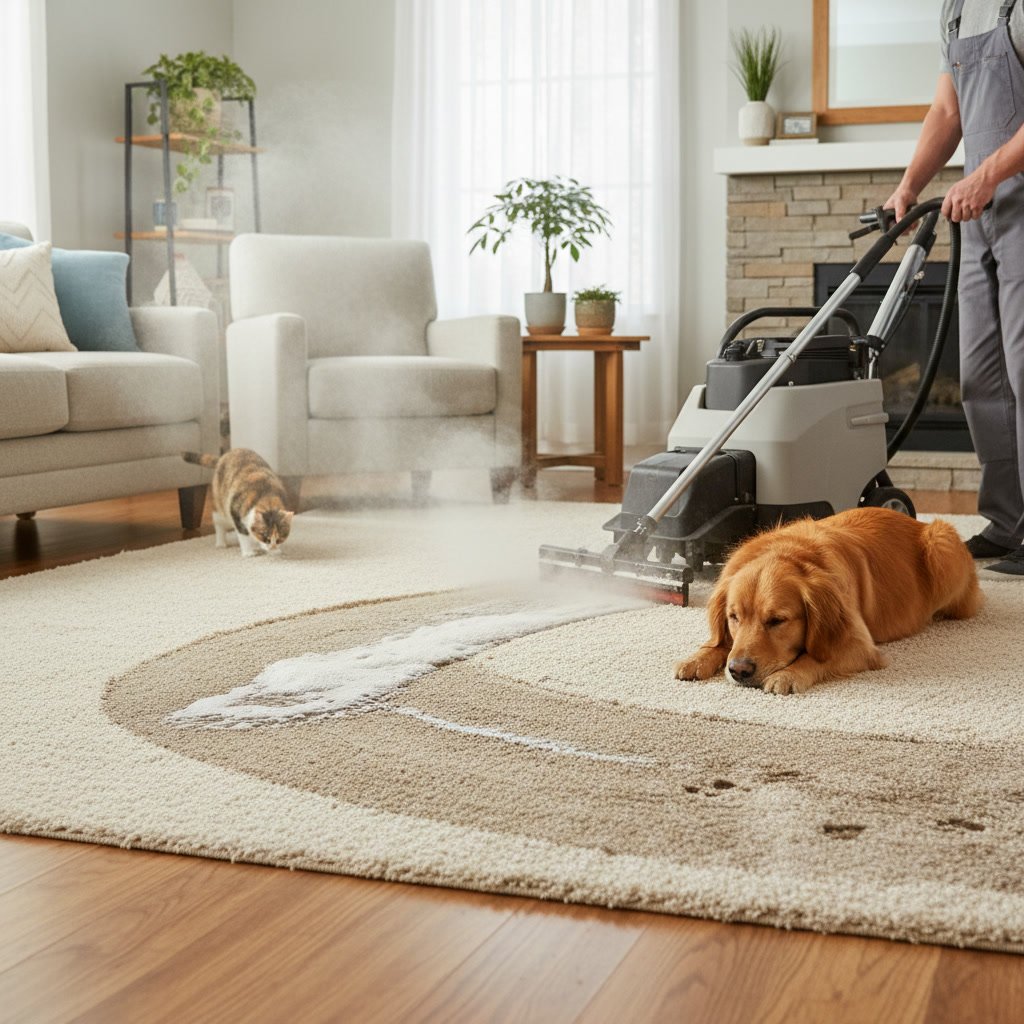
Professional carpet cleaning pet odors removal goes far beyond surface vacuuming. Deep extraction methods pull urine crystals, dander, and bacteria from carpet padding and fibers, while enzymatic treatments break down organic compounds that cause persistent smells. Hot water extraction reaches temperatures above 200 degrees, killing dust mites and allergens that trigger respiratory problems in sensitive family members.
Why Pet Accidents Create Lasting Problems in Carpet Fibers
When pets urinate on carpet, the liquid seeps through surface fibers into padding and sometimes reaches the subfloor. As urine dries, it forms uric acid crystals that bond to carpet backing. These crystals reactivate with humidity, releasing odor molecules into your air months after the original accident.
Standard home carpet cleaners lack the suction power to extract moisture from padding layers. Rental machines typically remove only 60-70% of applied water, leaving carpets damp for days. This moisture creates ideal conditions for bacterial growth and mold, compounding odor issues rather than solving them.
Pet dander accumulates in carpet at rates of up to 10 grams per square foot in homes with multiple animals. These microscopic skin flakes contain proteins that trigger allergic reactions. Regular vacuuming captures only surface dander, leaving deeper layers embedded in carpet pile where they continuously release allergens into your breathing space.
The Science Behind Persistent Animal Smells
Uric acid crystals are not water-soluble. Standard cleaning products spread the compounds around without breaking them down. The crystals remain dormant until environmental conditions change. Increased humidity, moisture from cleaning attempts, or even pet body heat reactivate the crystals, causing odors to return stronger than before.
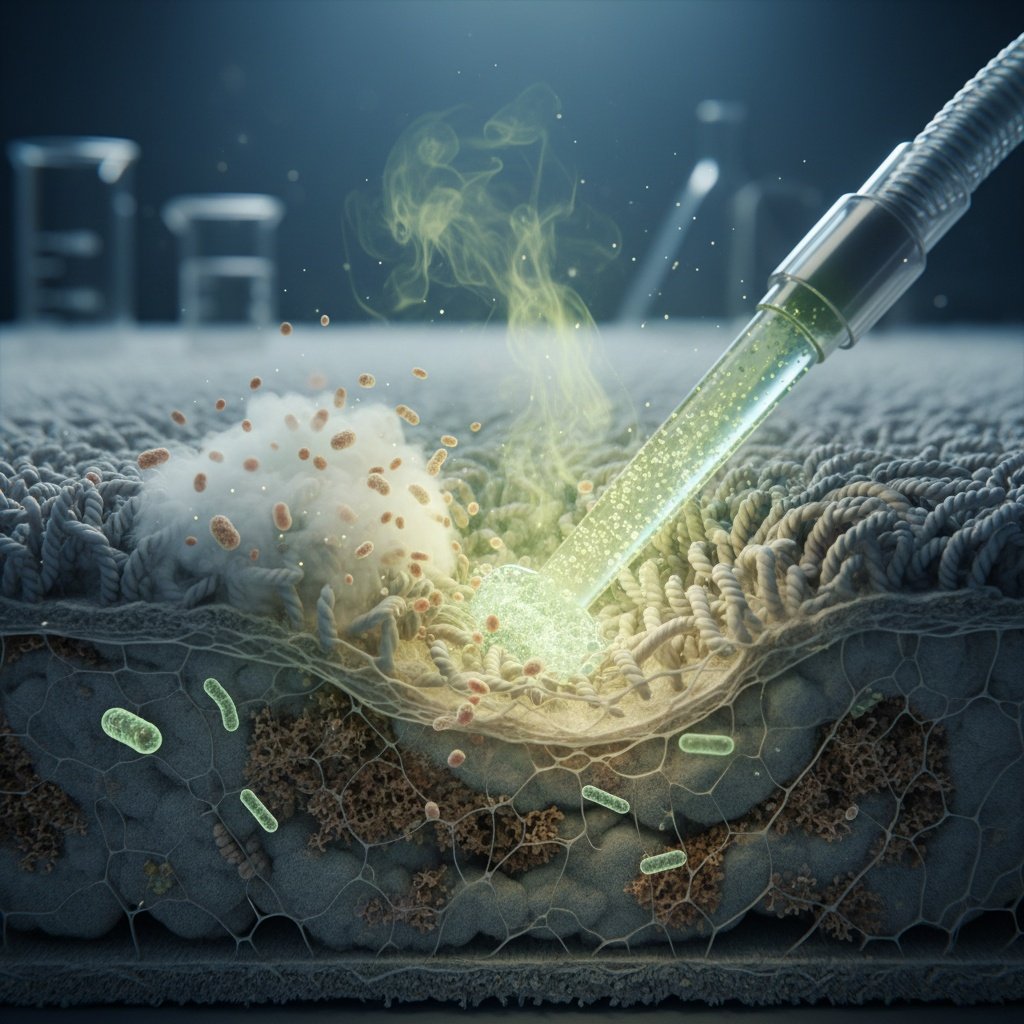
Bacterial decomposition of organic pet waste produces ammonia and mercaptans, sulfur compounds with exceptionally strong odors. These gases permeate carpet backing and padding. Without professional treatment, they continue generating smell molecules for years. The human nose can detect mercaptans at concentrations as low as one part per billion, making even trace amounts noticeable.
Animal saliva also leaves protein residues in carpet when pets groom themselves or chew on floor coverings. These proteins oxidize over time, creating stale odors that many homeowners misidentify as general mustiness rather than pet-related contamination.
How Deep Extraction Removes Embedded Contaminants
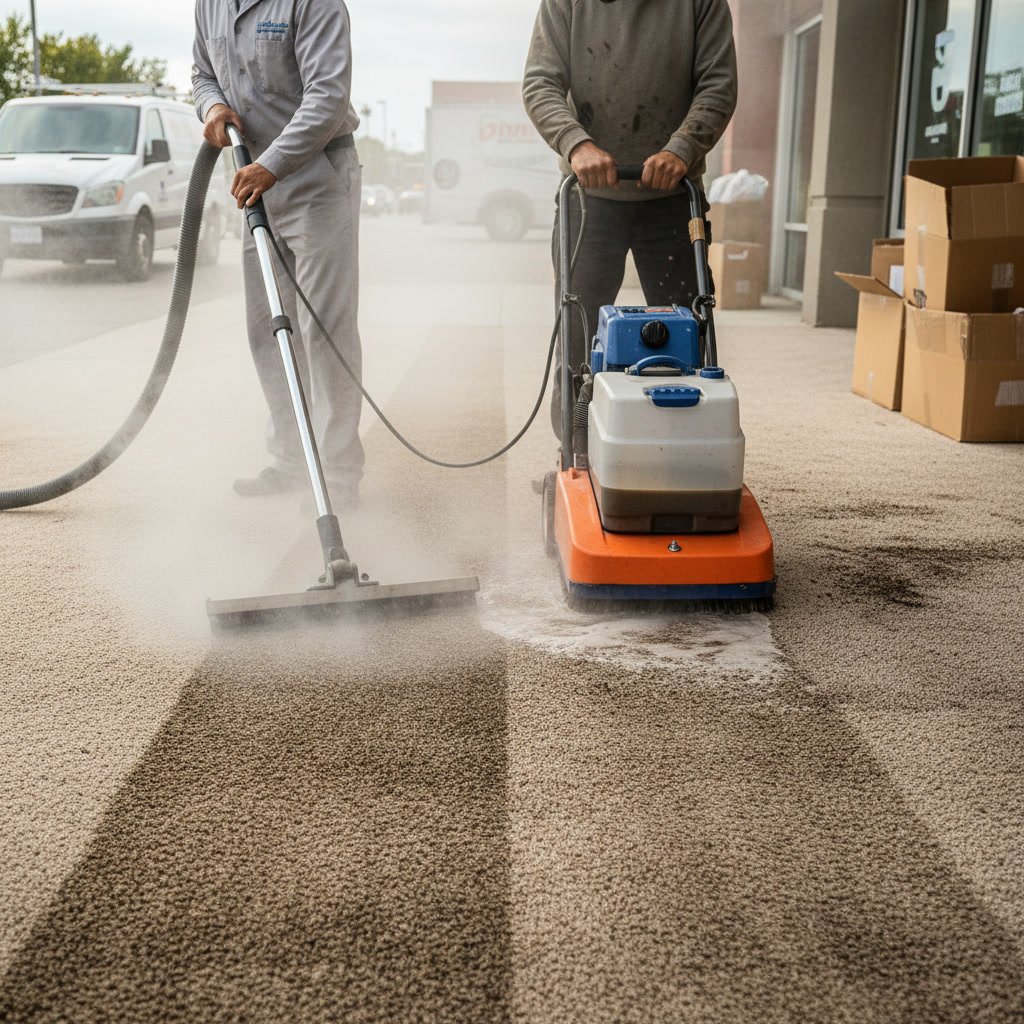
Professional truck-mounted cleaning systems generate water temperatures between 200-220 degrees and vacuum suction exceeding 500 horsepower. This combination forces heated cleaning solution through carpet backing and into padding, then extracts 95-97% of applied moisture along with dissolved contaminants.
The heat itself serves multiple functions. It liquefies oils and greases that trap dander and dirt particles. It accelerates chemical reactions in cleaning agents, improving their effectiveness. Most importantly, sustained heat above 140 degrees kills dust mites, their eggs, and most bacteria species that contribute to allergen loads.
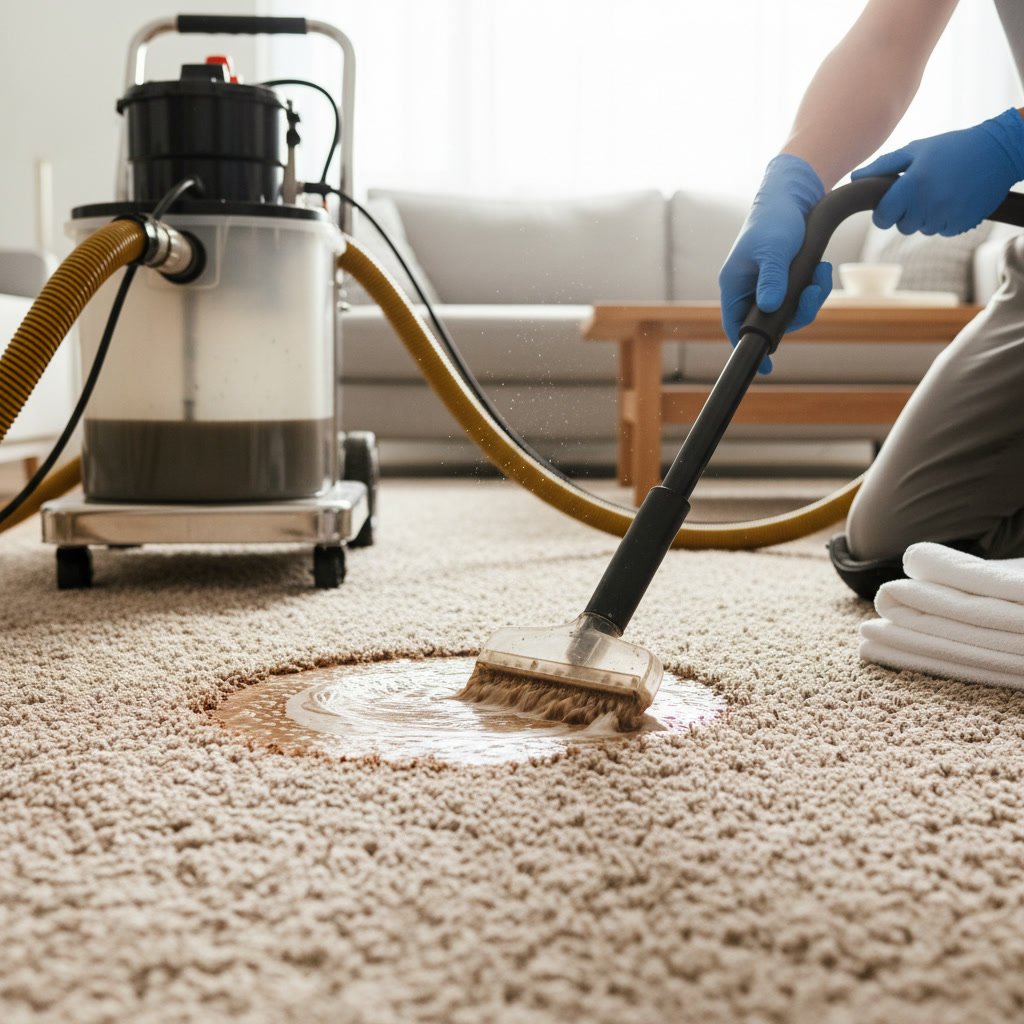
Specialized tools allow technicians to address specific problem areas. Counter-rotating brush systems agitate carpet pile to release embedded particles before extraction. Sub-surface extraction tools inject solution directly into padding layers where urine has pooled, something impossible with consumer equipment.
Enzymatic Treatments That Break Down Organic Compounds
Enzymes are biological catalysts that accelerate the breakdown of specific molecules. Pet odor treatments use protease enzymes to digest protein-based compounds in urine, feces, and saliva. Lipase enzymes target fatty acids in skin oils and food residues. Amylase enzymes break down carbohydrate-based stains.
These treatments work differently than masking agents. Rather than covering smells with fragrance, enzymes eliminate the source molecules producing odors. The process requires time and proper moisture levels. Professional application ensures even coverage and appropriate dwell time, typically 10-30 minutes depending on contamination severity.
Enzyme treatments remain active after initial application. If any uric acid crystals escaped the first treatment, continuing enzyme action breaks them down over the following 24-48 hours. This extended activity prevents odor rebound that often follows amateur cleaning attempts.
Allergen Reduction Through Professional Methods in Tracy
Homes in Tracy and surrounding areas face unique allergen challenges. Seasonal pollen from agricultural areas combines with pet dander to create heavy allergen loads in carpeting. Professional carpet cleaning removes up to 98% of allergens from treated areas when performed correctly.
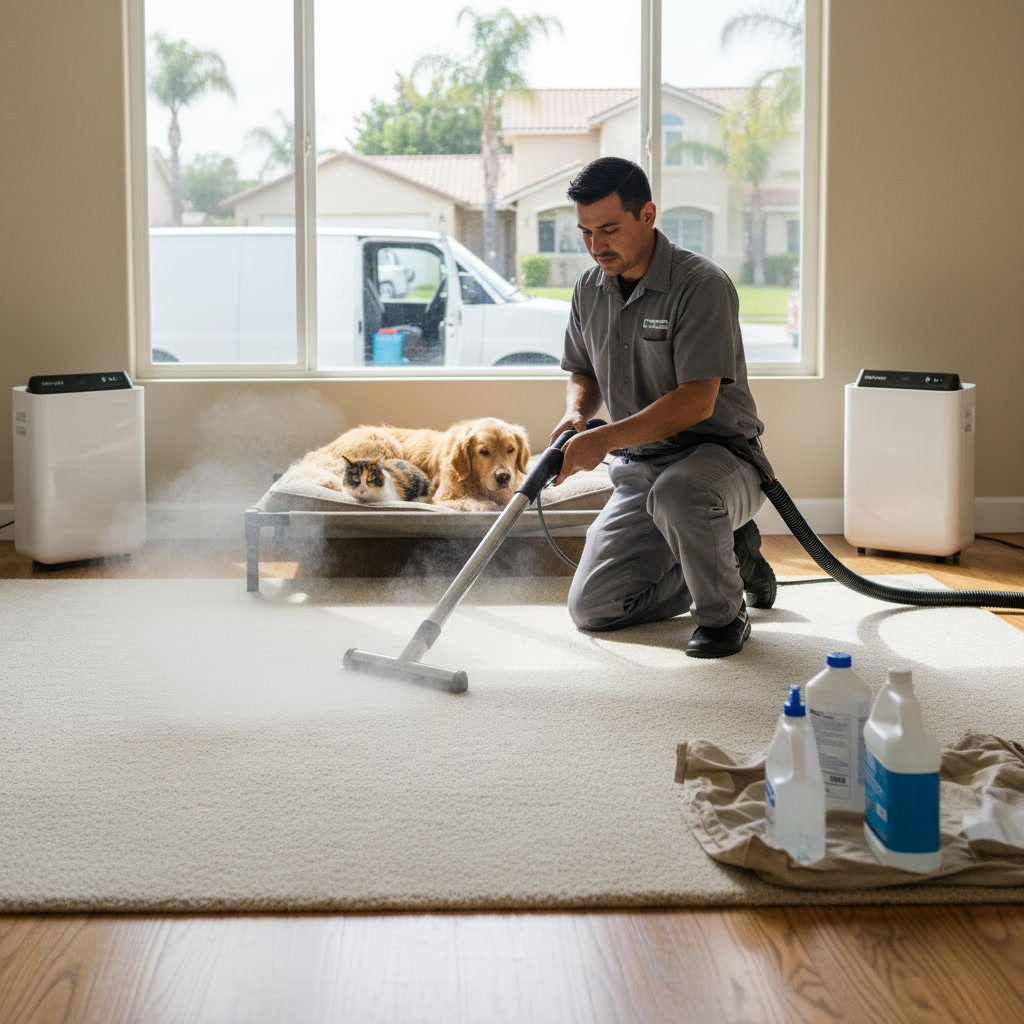
The extraction process physically removes allergen particles rather than simply redistributing them. Unlike dry cleaning methods that rely on vacuuming loosened particles, hot water extraction traps contaminants in solution and pulls them completely out of the home. This makes a measurable difference for family members with asthma or allergies.
Dust mite populations drop dramatically after professional cleaning. These microscopic creatures feed on shed skin cells and thrive in the warm, humid environment of carpet backing. The combination of heat exposure during cleaning and removal of their food source reduces populations by 90-95% immediately, with effects lasting several months.
Comparing Professional Equipment to Consumer Rental Machines
Truck-mounted systems draw power directly from vehicle engines, generating 20-30 times more vacuum lift than electric rental units. This increased suction extracts moisture from deep carpet layers that portable machines cannot reach. The result is faster drying times, typically 4-6 hours instead of 24-48 hours.
Water temperature represents another critical difference. Rental machines heat water to 140-160 degrees at best, and this temperature drops significantly as solution travels through hoses. Professional systems maintain consistent temperatures above 200 degrees at the cleaning wand, ensuring maximum effectiveness throughout the job.
Solution tanks in rental units hold 1-3 gallons, requiring frequent refills that interrupt cleaning and reduce efficiency. Professional systems carry 40-100 gallons, allowing continuous operation. This consistent flow prevents the stop-start pattern that leaves some carpet sections overwet while others receive inadequate treatment.
For situations where carpets have suffered severe contamination, understanding professional cleaning costs in the local area helps homeowners budget appropriately for restoration services rather than attempting inadequate DIY solutions.
Steps in the Professional Pet Odor Removal Process
Technicians begin with UV light inspection to identify all contaminated areas, including spots invisible to the naked eye. Dried urine fluoresces under blacklight, revealing the full extent of damage. This ensures no contaminated sections get missed during treatment.
Pre-treatment involves applying enzyme solutions to identified problem areas. These products need time to work, so technicians often treat multiple rooms in sequence, allowing proper dwell time in each area. Severe contamination may require padding removal and subfloor treatment, services that must be quoted separately.
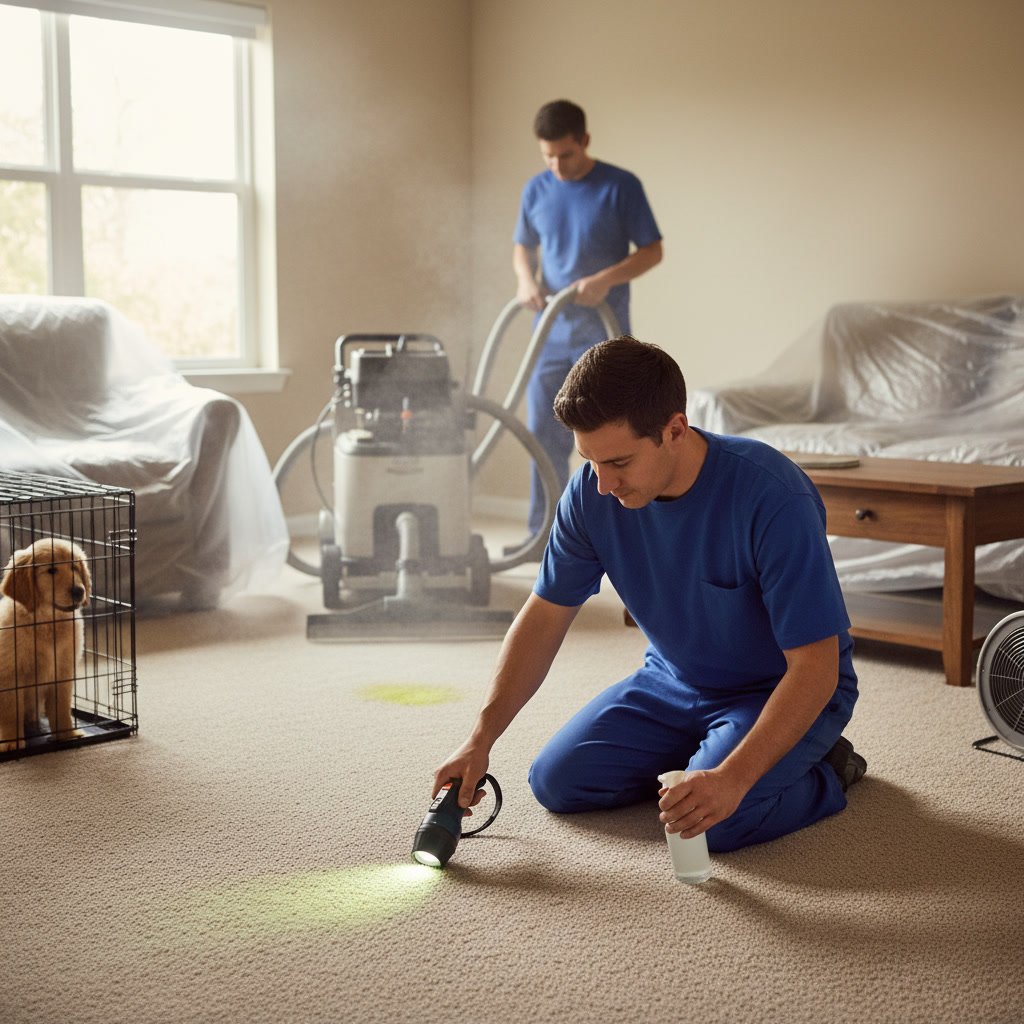
The extraction phase uses overlapping passes to ensure thorough cleaning. Technicians adjust solution flow, temperature, and vacuum power based on carpet type, soil level, and moisture sensitivity. Delicate natural fibers require gentler treatment than synthetic carpets, and skilled technicians recognize these differences.
Post-treatment inspection confirms odor elimination and proper moisture levels. Some situations benefit from additional services such as upholstery cleaning, since furniture often harbors the same pet-related contaminants as carpeting.
Long-Term Prevention After Professional Cleaning
Maintaining clean carpets after professional treatment extends results and protects your investment. Weekly vacuuming with HEPA-filtered machines prevents dander accumulation. These filters trap particles as small as 0.3 microns, including most allergens, rather than exhausting them back into room air.
Prompt accident cleanup prevents deep contamination. Blot fresh urine immediately with absorbent towels, applying pressure to pull moisture from padding. Avoid rubbing, which spreads contamination laterally. Apply enzyme treatment products specifically designed for pet accidents, following label directions for dwell time.
Pet grooming reduces the volume of dander, hair, and saliva deposited on carpets. Regular brushing removes loose fur before it sheds onto floors. Bathing pets every 4-6 weeks decreases skin flake production. These steps complement professional cleaning rather than replacing it.
Similar to how regular dryer vent maintenance prevents hazards, scheduled carpet cleaning prevents allergen buildup before it becomes a health problem. Most homes with pets benefit from professional service every 3-6 months rather than the standard annual cleaning.
Health Benefits of Allergen-Free Floor Coverings
Reducing carpet allergen loads improves indoor air quality measurably. Studies show that professional cleaning decreases airborne particulates by 40-60% in the weeks following service. This reduction translates to fewer respiratory symptoms for allergic family members, particularly children whose breathing zones sit closer to floor level.
Dust mite allergen is one of the most common triggers for asthma attacks. These creatures cannot survive without adequate moisture and food sources. Professional extraction removes both, creating an environment hostile to mite populations. The effect compounds over time with regular maintenance.
Pet allergen exposure has cumulative effects. Even people without diagnosed allergies can develop sensitivities after prolonged exposure to high allergen concentrations. Maintaining clean carpets prevents this sensitization process, protecting long-term health for all household members.
Commercial environments like schools and offices also benefit from allergen reduction, though residential settings with pets face more intense contamination from continuous animal presence.
When to Consider Padding Replacement
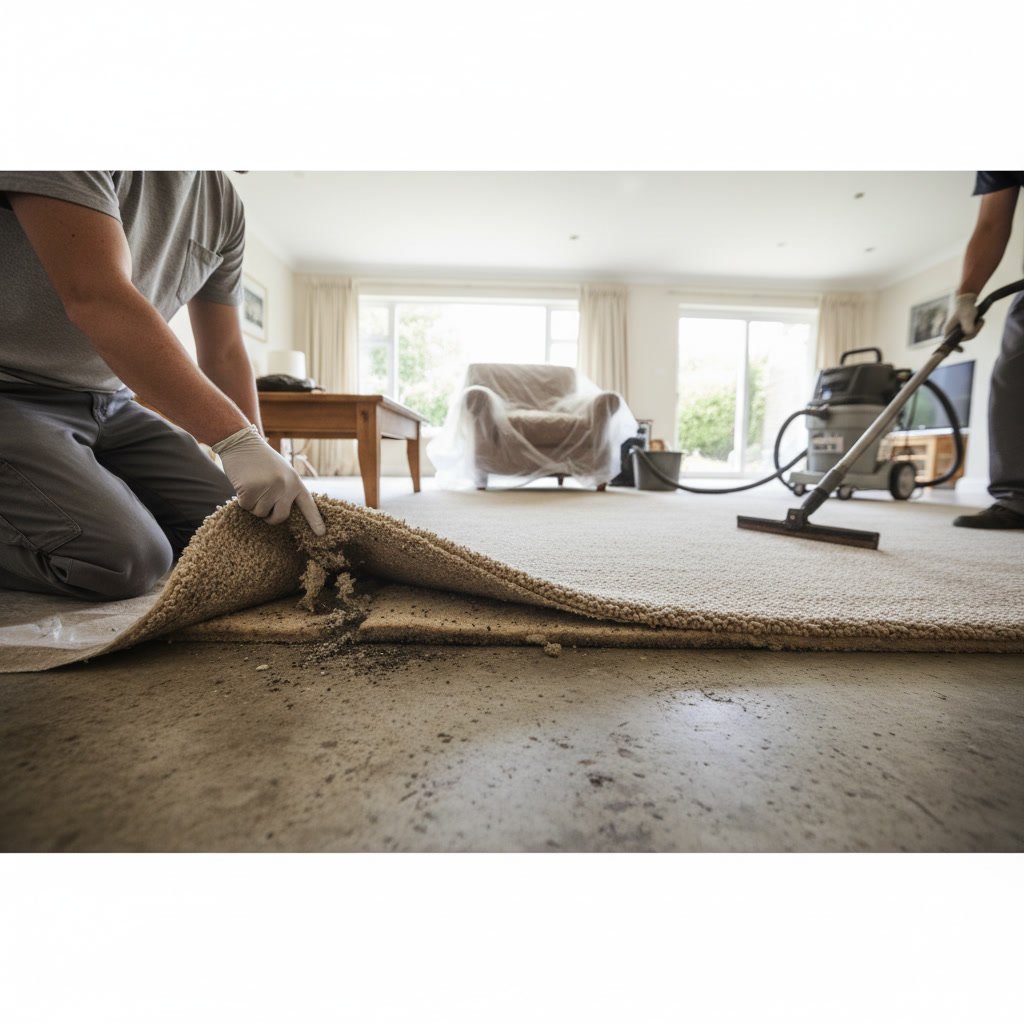
Carpet padding absorbs and retains urine more readily than surface fibers. Once saturated, padding becomes a permanent odor source that cannot be fully remediated through cleaning alone. Signs that padding needs replacement include persistent odors after professional cleaning, visible staining on padding when carpet is lifted, and floor discoloration beneath padding.
Replacement typically costs 50-75 cents per square foot for standard density foam padding. This expense is often worthwhile for heavily contaminated areas rather than spending repeatedly on treatments that provide only temporary relief. Technicians can assess padding condition during initial inspection and provide honest recommendations.
Subfloor sealing may be necessary if urine has penetrated wood or concrete. Specialized sealant products encapsulate odor molecules and prevent their release into room air. This additional step adds cost but provides permanent resolution for severe contamination cases.
Keeping Your Home Fresh and Healthy
Professional treatment addresses pet odors and allergens at their source rather than masking symptoms. The combination of high-temperature extraction, enzymatic treatments, and powerful vacuum systems removes contaminants that household methods cannot reach. Results include fresher air, reduced allergy symptoms, and carpets that look and smell genuinely clean.
Grasso Carpet Cleaning has served families in the Manteca area for over 50 years, using environmentally safe products and standing behind every job with a 100% guarantee. Our family treats your home with the same care we’d give our own, ensuring thorough odor elimination and allergen reduction that protects your family’s health.
If pet odors or allergens are affecting your home’s comfort, professional treatment provides the deep cleaning your carpets need. Call +12092392906 or visit our contact page to schedule your appointment and experience the difference that five decades of expertise makes.