Professional tile grout cleaning stains removal uses high-pressure steam, alkaline solutions, and specialized brushes to penetrate porous grout lines and extract embedded oils, food residue, and discoloration that standard mopping cannot address. The process restores original grout color by breaking down organic compounds at the molecular level while lifting surface stains from ceramic and porcelain tile without damaging protective glazes.
Why Kitchen Floors Develop Stubborn Stains
Kitchen environments expose tile and grout to constant challenges. Cooking oil becomes airborne during frying and settles on floor surfaces as an invisible film. Spilled sauces, fruit juices, and wine contain natural dyes that bond with porous grout. Foot traffic grinds these substances deeper into the microscopic holes that make grout vulnerable.
Grout is essentially hardened sand mixed with cement. This creates a surface riddled with tiny pores that trap moisture, oils, and particles. Once staining agents penetrate these pores, surface cleaning only addresses the top layer. The discoloration remains locked beneath, creating that dingy appearance that makes even recently mopped floors look dirty.
The Limitations of DIY Cleaning Methods
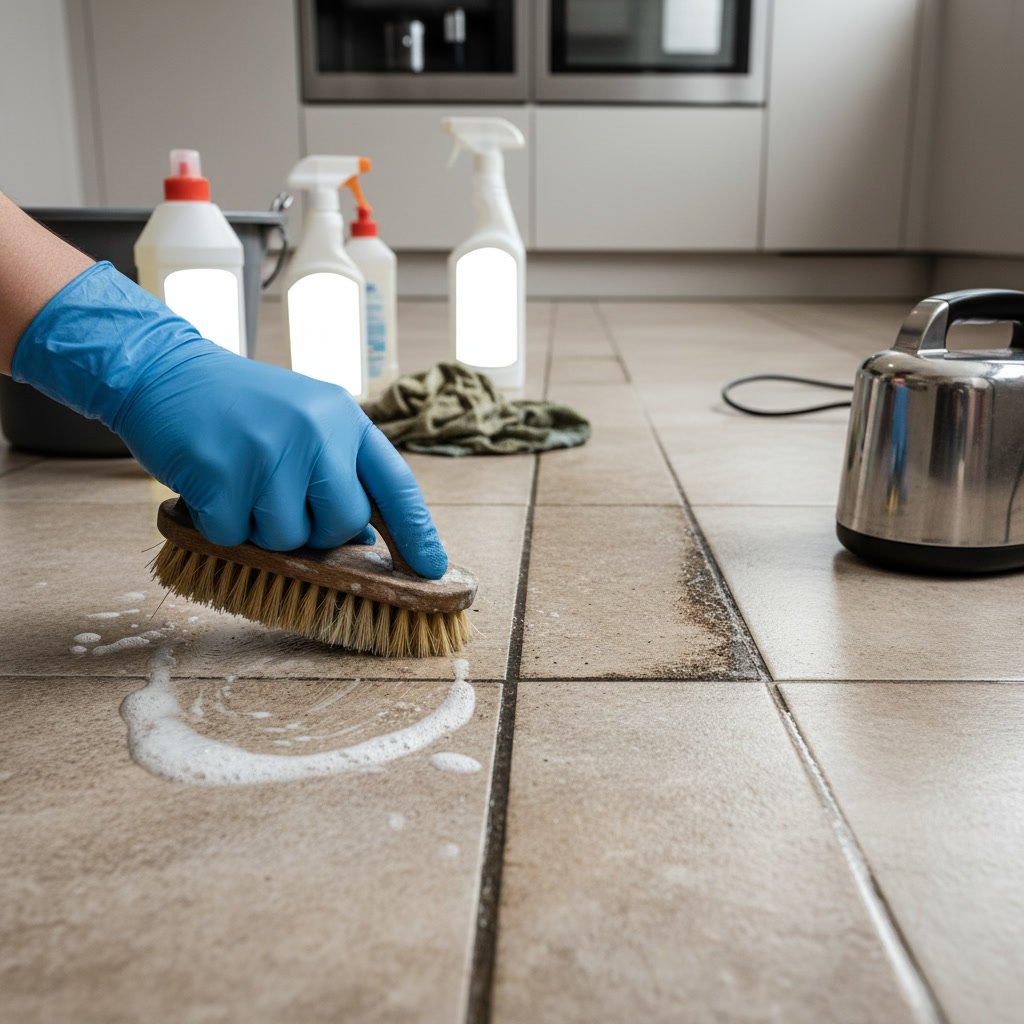
Store-bought cleaners and household mops lack the mechanical force and chemical strength to reverse deep grout staining. A standard mop pushes dirty water across the floor, sometimes forcing more soil into grout lines rather than extracting it. Scrub brushes require sustained physical effort and still cannot reach contaminants buried below the grout surface.
Many homeowners try bleach-based products, assuming they will whiten grout. While bleach can lighten surface discoloration temporarily, it does not dissolve oils or remove embedded particles. Overuse of bleach can also weaken grout structure over time, making it more porous and prone to future staining. Acidic cleaners marketed for tile can etch natural stone and damage grout seals.
How High-Pressure Steam Extraction Works
Professional equipment heats water to temperatures exceeding 200 degrees Fahrenheit and delivers it through narrow nozzles at pressures between 500 and 1,200 pounds per square inch. This combination of heat and force breaks the molecular bonds that hold grease and organic stains to grout particles.
The steam penetrates grout pores instantly, liquefying hardened oils and dissolving sugars from food spills. Simultaneous vacuum extraction pulls the loosened contaminants away before they can resettle. This process removes not just the visible stain but also the bacteria and mold spores that thrive in damp, nutrient-rich grout environments.
Alkaline Solutions and Their Role in Stain Removal
Professional cleaners apply pH-balanced alkaline solutions before steam cleaning. These formulas are engineered to emulsify fats and oils, turning them into water-soluble compounds that rinse away easily. The alkaline environment also neutralizes acidic stains from tomato sauce, citrus, and wine.
Unlike harsh household chemicals, professional-grade solutions are calibrated to clean aggressively without etching tile surfaces or degrading grout. They contain surfactants that reduce water’s surface tension, allowing the cleaning agent to spread evenly and penetrate uniformly rather than beading up on glazed tile.
Rotary Brush Technology for Embedded Grime
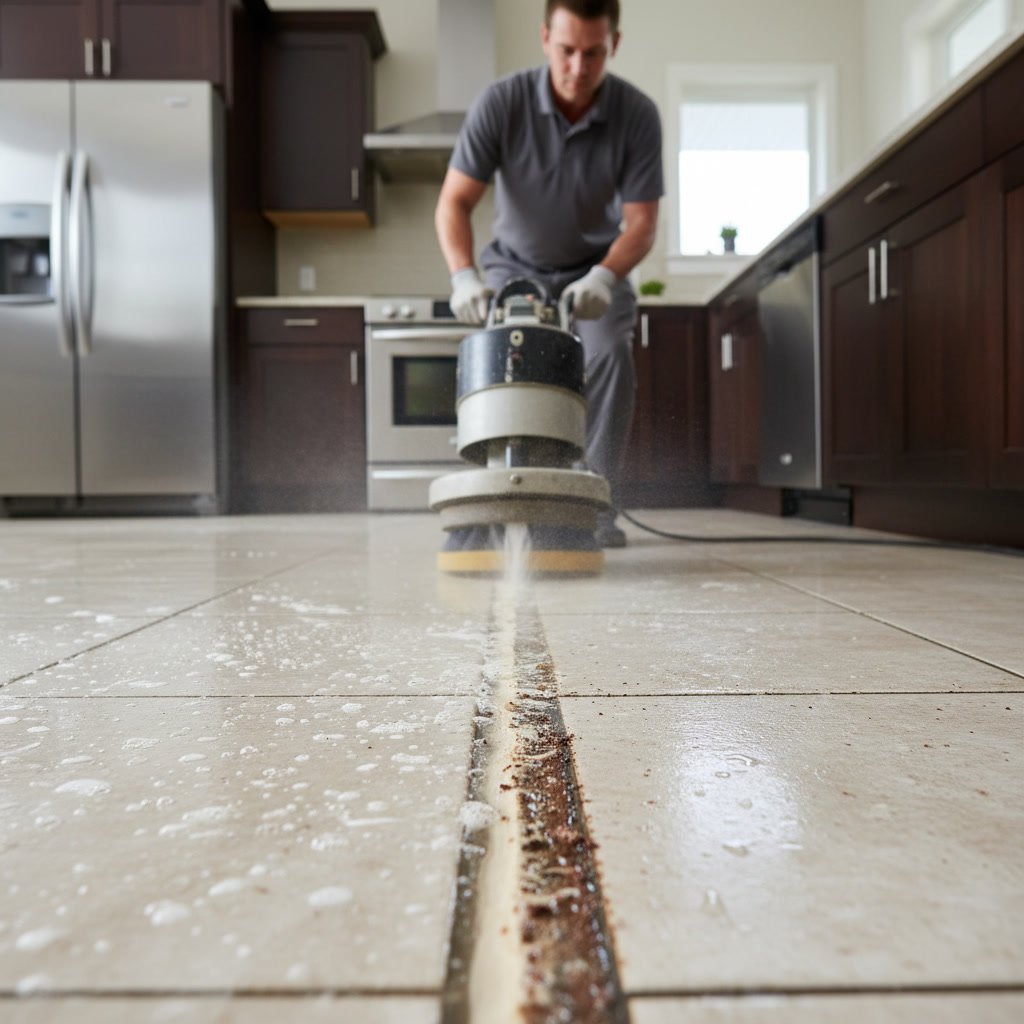
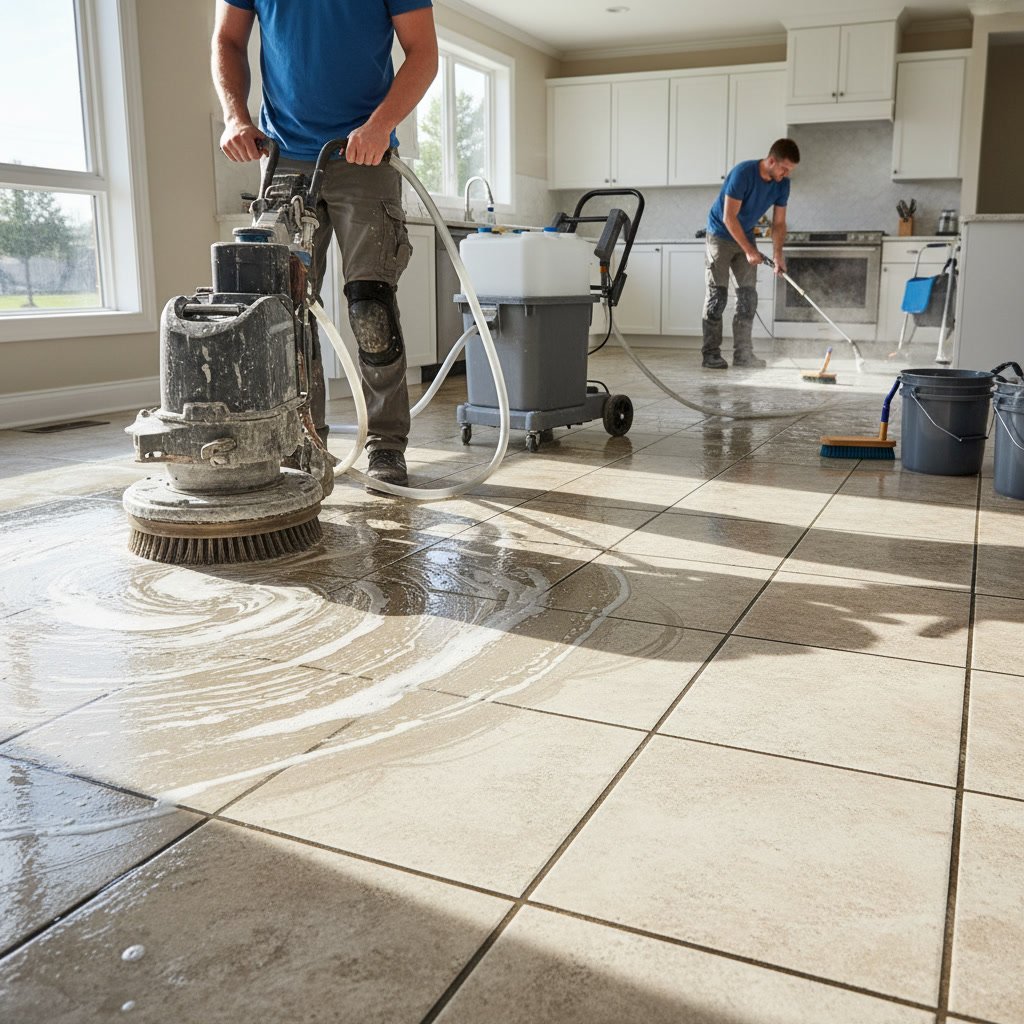
Motorized rotary brushes with stiff nylon or natural fiber bristles provide the mechanical agitation that manual scrubbing cannot match. These machines spin at hundreds of revolutions per minute, creating a scrubbing action that dislodges particles wedged deep in grout texture.
The brush head applies consistent pressure across the entire floor, ensuring even cleaning without the fatigue and inconsistency of hand scrubbing. Professional technicians adjust brush stiffness and rotation speed based on tile type, addressing delicate natural stone differently than durable porcelain.
Step-by-Step Professional Cleaning Process
The first step involves a thorough dry vacuuming to remove loose dirt and debris. This prevents dry soil from turning into mud when wet cleaning begins. Next, technicians apply a pre-treatment solution to the most heavily stained areas, allowing it to dwell for several minutes while it breaks down grease and discoloration.
The main cleaning phase combines rotary brushing with alkaline solution, working in manageable sections to maintain consistent contact time. High-pressure steam extraction follows immediately, flushing away loosened contaminants and residual cleaning agents. A final rinse with clean water ensures no chemical residue remains that could attract new dirt.
Floors are then dried using air movers or absorbent materials. Proper drying is critical because damp grout invites mold growth and can lead to efflorescence, the white powdery residue that appears when mineral salts migrate to the surface.
Specialized Treatments for Different Stain Types
Grease stains require degreasers with higher alkalinity and longer dwell times. Protein-based stains from food spills respond better to enzymatic cleaners that digest organic matter. Rust stains, often from metal furniture legs or water with high iron content, need acid-based spot treatments applied carefully to avoid damaging surrounding areas.
Tannin stains from coffee, tea, or red wine benefit from oxidizing agents that break down the pigment molecules. Each stain category demands a tailored chemical approach, which is why professional services achieve results that one-size-fits-all consumer products cannot replicate.
The Importance of Post-Cleaning Sealing
After deep cleaning, grout is more porous and vulnerable than before because the cleaning process strips away any existing sealer along with the dirt. Applying a penetrating sealer fills grout pores with a protective barrier that repels water, oils, and staining agents.
Quality sealers do not sit on the surface but soak into the grout matrix, creating protection from within. This makes future spills easier to clean because liquids cannot penetrate as readily. Most sealers require 24 to 72 hours to cure fully, during which time foot traffic should be minimized.
Homeowners who want to understand how preparation enhances sealer performance can learn more about how to prepare tile for sealing to maximize long-term protection.
How Professional Service Extends Floor Lifespan in Tracy
Regular professional cleaning prevents the gradual deterioration that occurs when grime accumulates in grout joints. Stains left untreated can chemically react with grout materials, causing discoloration that becomes permanent. Moisture trapped in dirty grout promotes mold and mildew, which produce acids that erode grout over time.
By removing these destructive elements before they cause structural damage, professional maintenance preserves both the appearance and integrity of your flooring investment. Most tile manufacturers recommend professional cleaning every 12 to 18 months for residential kitchens, more frequently for high-traffic commercial settings.
Grasso Carpet Cleaning has served families in Tracy and the surrounding region for over 50 years, bringing expertise that comes from treating thousands of kitchen floors with every type of staining challenge.
Comparing Professional Methods to Consumer Carpet Cleaners
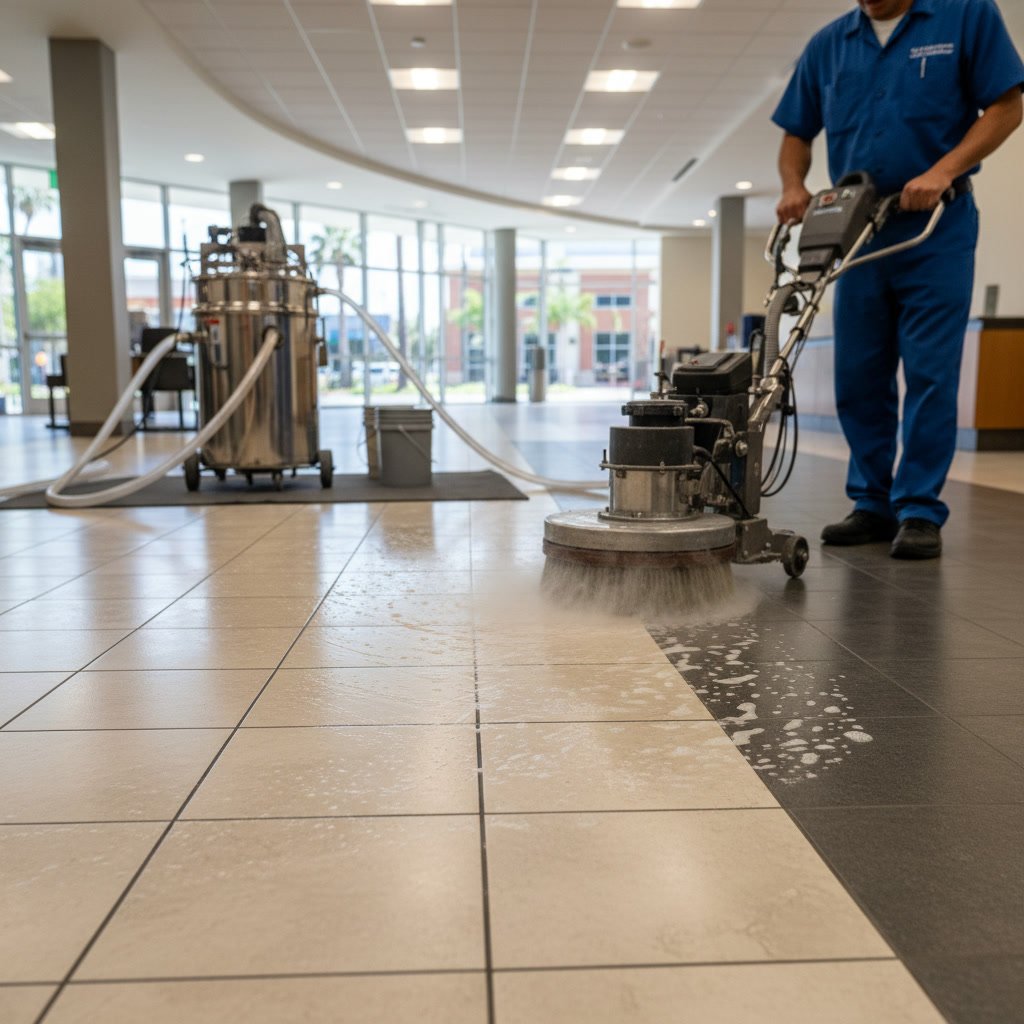
Some homeowners attempt to clean tile and grout using rental carpet cleaning machines. These units lack the pressure, temperature, and extraction power of professional tile equipment. Carpet cleaners are designed for soft, absorbent fibers, not hard, non-porous surfaces and dense grout.
The result is often incomplete cleaning with excessive water left behind. This standing water can seep beneath tiles, loosening adhesive and creating conditions for subfloor mold. Professional tile equipment uses minimal water with maximum extraction, leaving floors dry enough to walk on within an hour.
The same principles apply to other surfaces in your home. Just as specialized equipment matters for floors, professional services also make a difference when addressing issues like allergens and dust mites in upholstered furniture.
Maintaining Clean Floors Between Professional Services
Regular maintenance extends the results of professional cleaning. Sweep or vacuum kitchen floors daily to prevent dirt from being ground into grout. Wipe up spills immediately, before they have time to penetrate porous surfaces. Use pH-neutral cleaners designed specifically for tile and grout rather than all-purpose products that may leave residue.
Place mats near sinks and stoves where splashing is common. These catch drips and reduce the amount of moisture and food particles that reach grout lines. A sealed floor is easier to maintain, but even the best sealer requires proper daily care to perform effectively.
Avoid steam mops for daily cleaning. While they seem similar to professional steam cleaning, consumer steam mops lack extraction capability. They deposit moisture into grout without removing it, potentially causing more harm than good over time. A damp mop with appropriate cleaner provides better results for routine maintenance.
Restoring Your Kitchen Floor to Original Beauty
Professional tile grout cleaning stains removal transforms kitchens by addressing contamination at its source rather than masking it with surface treatments. The combination of thermal energy, chemical action, mechanical agitation, and powerful extraction achieves results that justify the investment, especially when you consider the cost of replacing flooring prematurely due to neglect.
Clean grout lines also improve indoor air quality by eliminating mold spores and bacteria that thrive in dirty, damp environments. The aesthetic improvement is immediate and dramatic, often making the entire kitchen feel newer and more hygienic.
Grasso Carpet Cleaning brings five decades of family expertise to every tile and grout cleaning project, using environmentally safe products that protect your family while delivering professional results. Our technicians serve homeowners throughout Stockton, Modesto, and the surrounding communities with the same commitment to quality that has defined our business for three generations. Schedule your kitchen floor restoration by calling +12092392906 or visiting our contact page to arrange a consultation.